Snyder Wellness
Your Mind, Body, Spirit Connection
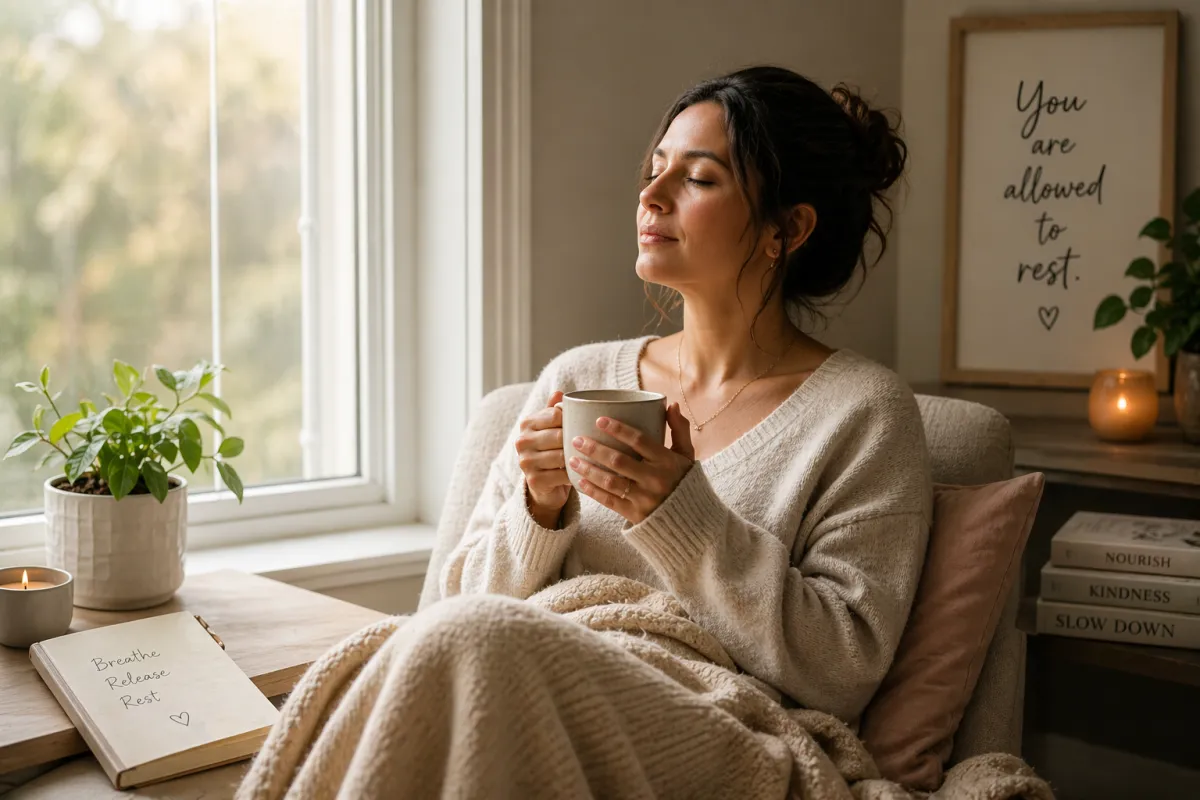
Why Your Nervous System Thinks Rest Feels Unsafe
Have you ever finally sat down to relax, only to feel more anxious instead of less?
The house gets quiet. The to-do list pauses for a moment. Maybe you even tell yourself, “Good, I’m finally going to rest.” And then suddenly your brain remembers twelve things you forgot, your chest feels tight, and now reorganizing a junk drawer somehow feels urgent.
That isn’t laziness, and it doesn’t mean you’re bad at relaxing. It usually means your nervous system has gotten very good at surviving.
For a lot of people, especially caregivers, high achievers, helpers, and anyone who has lived through prolonged stress, rest can feel strangely uncomfortable. When your body has spent months or years in survival mode, stillness doesn’t feel peaceful. It feels unfamiliar. And unfamiliar often gets interpreted as unsafe.
Your nervous system learns patterns. If your body has been trained to believe safety comes from staying productive, staying alert, anticipating problems, fixing things for everyone else, or preparing for the next fire to put out, then slowing down can feel wrong. Sometimes it even feels dangerous.
This is why people feel guilty when they rest. It’s why vacations can create anxiety instead of peace. It’s why sitting still can make your thoughts louder instead of quieter. Your body isn’t fighting peace; it just hasn’t learned to trust it yet.
Stress hormones like cortisol and adrenaline can become your norm. Living in a constant low-grade state of urgency starts to feel familiar, and your brain gets used to functioning there. Then, when calm finally shows up, your system responds as if something must be wrong.
I see this all the time when people say, “I know I need to slow down,” or “I know I need better boundaries,” or my personal favorite, “I know I should relax, but I don’t know how.”
The truth is, knowledge and nervous system regulation are not the same thing. You cannot logic your way out of survival mode. You have to teach your body what safety feels like, and that usually happens in much smaller ways than people expect.
Sometimes it starts with five quiet minutes without reaching for your phone. Sometimes it looks like taking a walk without turning it into another productivity task. Sometimes it’s sitting outside and actually noticing the air, or eating a meal without multitasking, or letting something be good enough instead of perfect.
These little moments matter because your nervous system doesn’t need one dramatic life overhaul. It needs repeated proof that peace is safe. That rest is allowed. That your worth is not measured by how exhausted you are.
This is also why healing can feel strange before it feels good. Peace can feel boring at first. Calm can feel uncomfortable. Boundaries can feel selfish. Rest can feel lazy.
But often, those feelings are not truth. They are withdrawal symptoms from chaos.
Sometimes what we call normal is really just familiar dysfunction, and healing feels weird because peace is new. That doesn’t mean you’re doing it wrong. It means your system is learning something different.
Be patient with that process, especially if you are the person everyone else depends on. Especially if being strong became part of your identity. Especially if you learned early in life that your needs were supposed to come last.
You are allowed to build a different relationship with rest. Not because you earned it. Because you need it. Because your body was never designed to live in emergency mode forever.
Rest is not a reward for finishing everything. It is part of wellness. It is part of healing. It is part of coming back to yourself.
So if slowing down feels hard, don’t immediately assume you’re failing. Instead, ask yourself this:
What if my body is simply trying to learn safety in a new way?
That question changes everything. Because healing rarely starts with doing more.
Sometimes it starts with finally allowing yourself to do less.
NAVIGATION
Home
About
Courses
Tools
Podcast
Contact
RESOURCES
About
Courses
Tools
Podcast
Contact
SOCIAL MEDIA
LOCATION
1111 Sunset Blvd.
Los Angeles, California.
(800) 987-654-3210
All Rights Reserved 2021. Built With Clixlo.